For the past decade, the “good” bathroom looked basically the same in every home: white subway tile, chrome fixtures, a frameless glass shower, a floating vanity, recessed cans in the ceiling. Functional. Clean. Indistinguishable from the next one.
In 2026, designers across the industry are calling time on that template. The clinical, house-flip bathroom is over. The new design language treats the bathroom less like a utility closet and more like a furnished room you actually want to spend time in warmer, more tactile, more considered.
Here’s what that looks like, and where we’d put your remodel dollars this year.
1. Warm Earth Tones — The All-White Era Is Officially Done
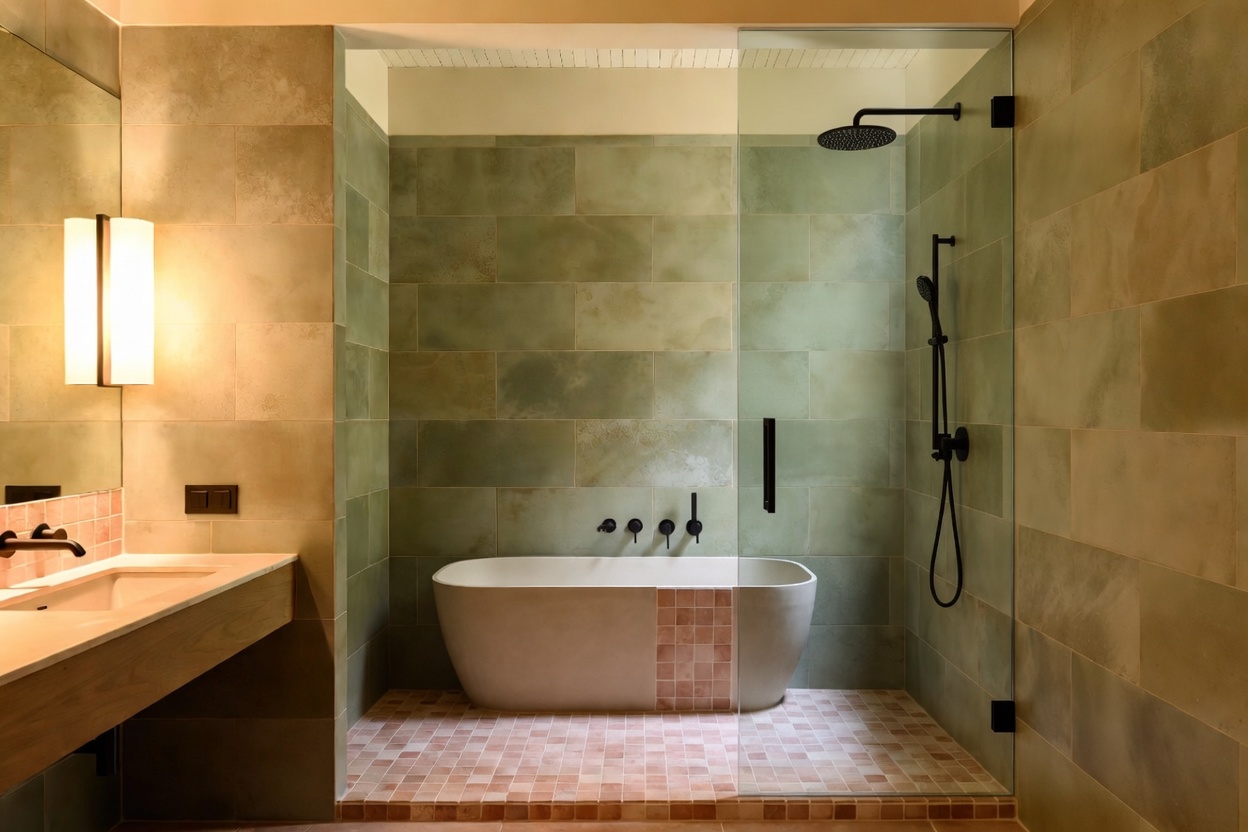
If there’s one consensus across every major 2026 design forecast Houzz, Re-Bath, Decorilla, NKBA — it’s this: cool gray and pure white are out. The new palette is grounded and warm.
The colors leading 2026:
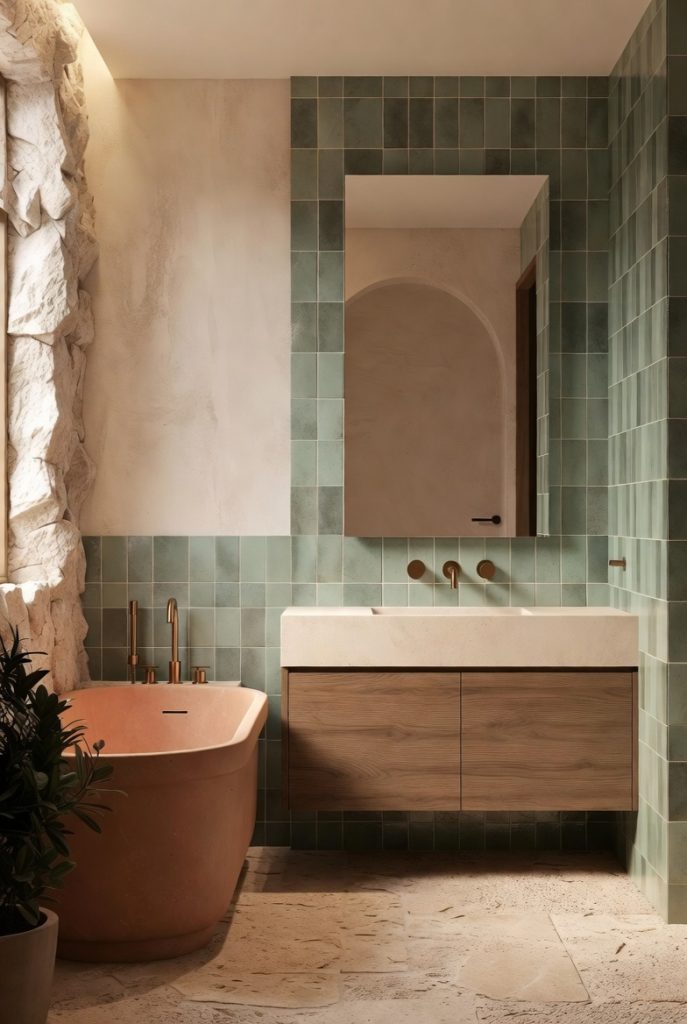
- Sage and jade greens: calming, biophilic, surprisingly versatile
- Taupe, greige, and sandy beige: the new “neutral”
- Terracotta and sun-baked earth tones: used as accents, especially on tile and stone
- Warm off-whites: replacing the cold bright whites that read sterile
What’s changing isn’t just paint. Vanity finishes have shifted toward medium-tone walnut, oak, and rift-cut woods. Stone is being chosen for its warm veining (think travertine, honed limestone, warm-toned quartzite) rather than the high-contrast gray-and-white marble of the last cycle.
The Yellow Hat take: If you’re remodeling in 2026 and your designer is still pulling cool gray quartz and a white subway field, ask why. The bathrooms that will still look intentional in 2032 are the ones leaning into warmth now.
2. Vanities as Furniture, Not Fixtures
The single biggest visual upgrade in a 2026 bathroom isn’t the shower it’s the vanity. The trend has shifted hard toward vanities that look more like a beautiful piece of furniture than something pulled out of a big-box catalog.
What’s defining the new vanity:
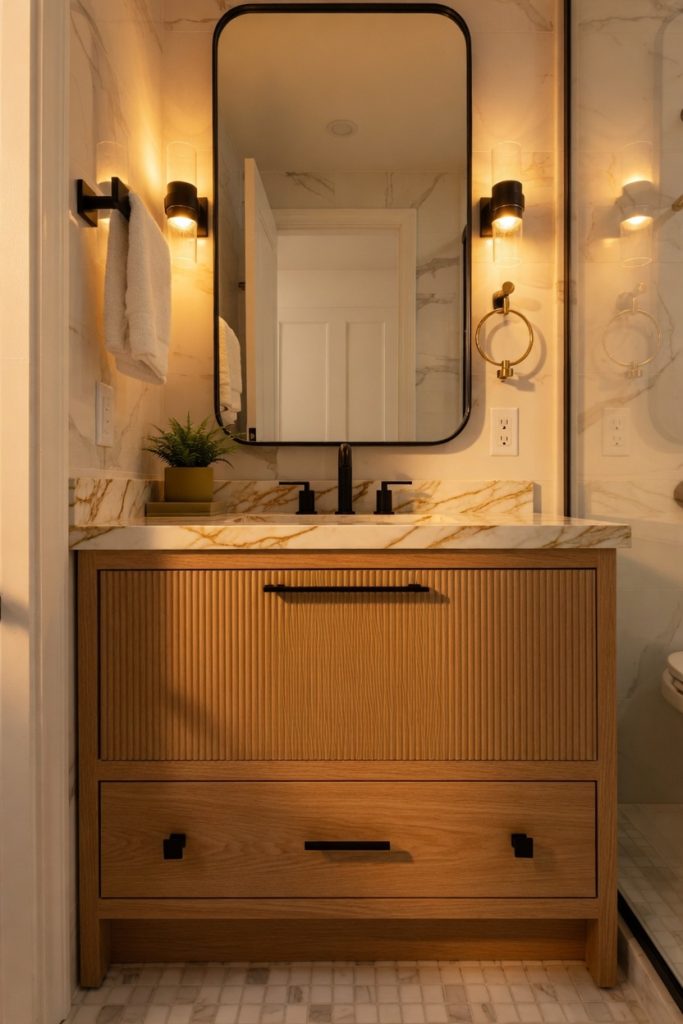
- Fluted or reeded wood fronts: texture you can feel, depth that catches light
- Custom paint finishes: sage, deep blue-green, warm cream, even soft terracotta
- Furniture-style legs or recessed plinth bases: instead of the boxy floor-to-counter slab
- Integrated linen towers and decorative hardware: built-in storage that looks intentional, not bolted-on
Storage-focused vanities are quietly the most impactful upgrade you can make. Deep drawers (not cabinet doors), built-in outlets inside the drawer for hair tools and electric toothbrushes, drawer dividers for makeup and toiletries — these are the details that change daily life. They also signal a level of finish that reads custom, not contractor.
Pro tip: A 60-inch furniture-style vanity in a primary bath will do more for the room than any other single decision. Plan it first; everything else flows from it.
3. Stone Slab and Large-Format Tile — Fewer Grout Lines, More Drama
Statement tile isn’t going away, but how it’s being used is changing. The trend in 2026 is toward large-format stone slabs and big-format tile that run continuously across surfaces — what designers are calling “stone drenching” or “tile drenching.”
A wall doesn’t get a backsplash anymore; it gets wrapped from counter to ceiling in a single slab. Shower walls go from busy mosaics to large-format panels with minimal grout. Stacked rectangular wall tile is currently appearing in roughly 18% of remodel plans according to Sweeten’s 2026 data — a notable jump from prior years.
Why it matters:
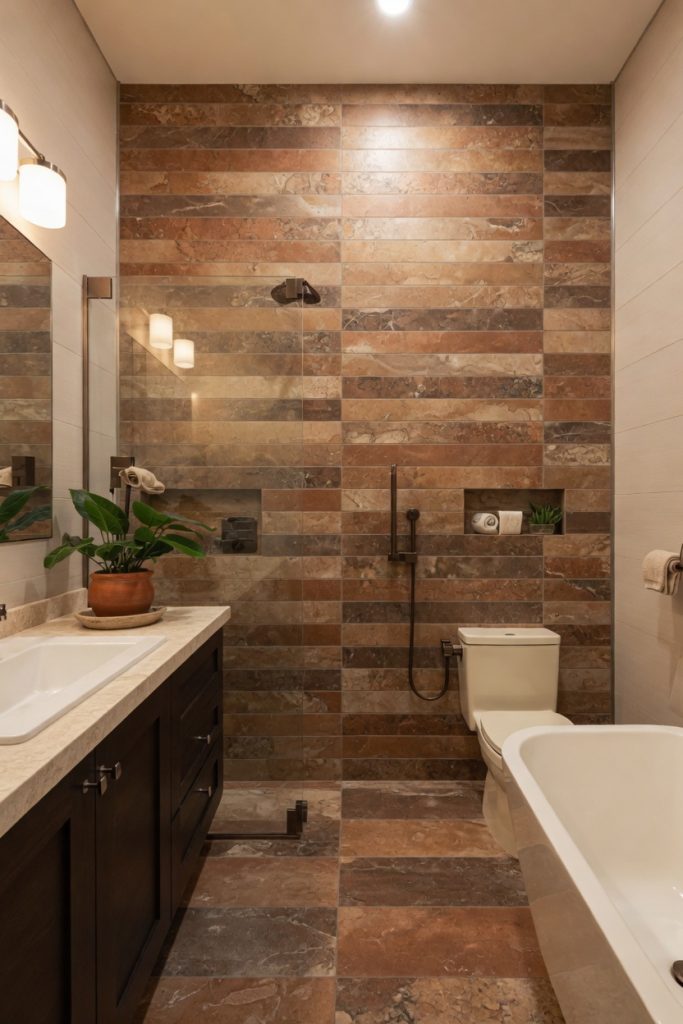
- Dramatically less grout = less cleaning, fewer failure points
- Continuous veining creates a more architectural, gallery-like feel
- Reads luxurious without going loud
Patterned tile still has a place — herringbone, mosaic, hand-painted Mediterranean tile — but used as deliberate accents, not as the whole field.
4. Lighting That’s Treated as Architecture
This is the upgrade homeowners consistently underspend on, and the one that changes the room more than people expect.
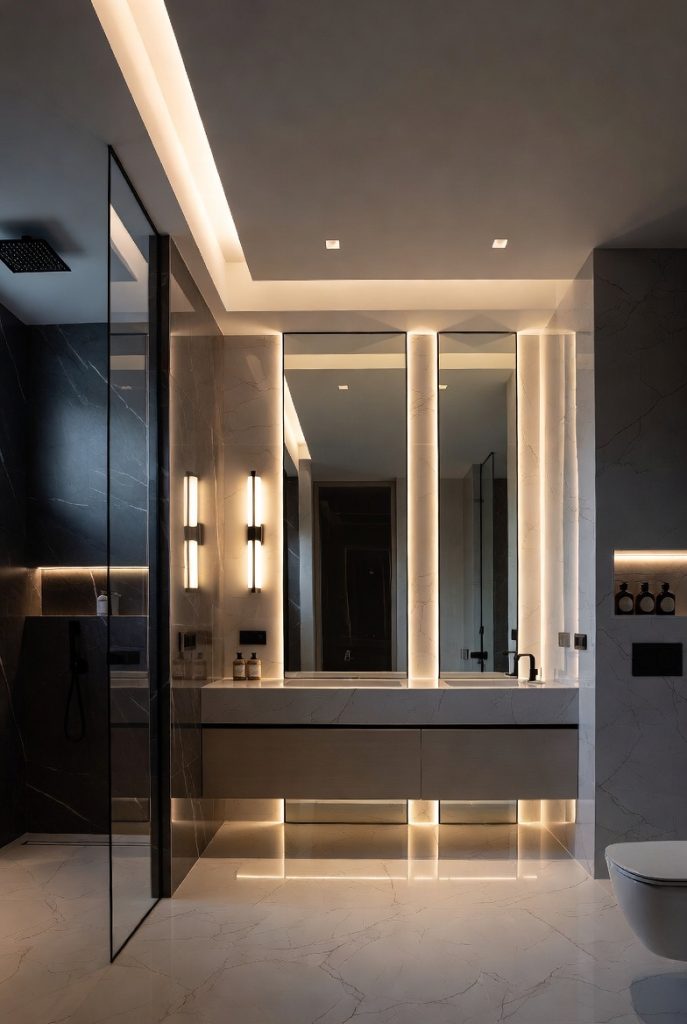
The 2026 approach to bathroom lighting is layered, dimmable, and intentional closer to how a hotel suite is lit than how a builder-grade bathroom is lit.
The three layers every well-designed 2026 bathroom has:
- Ambient: soft general light, often warm-temperature LED, often indirect (cove lighting, backlit mirrors)
- Task: vertical sconces flanking the mirror at face height (not a single bar above), which eliminates the unflattering shadows from overhead-only lighting
- Accent: small picture lights over art, toe-kick lighting under floating vanities, niche lighting inside the shower
Add dimmers to every circuit. The same room should be able to do a 7 AM morning routine and a 9 PM bath at the same fixture count — just at different intensities and warmth.
One specific upgrade with huge payback: swap the harsh overhead can lights for a single warm pendant or chandelier (yes, in a bathroom). It’s the move that instantly makes the room feel like a room.
5. Mixed Warm Metals — Chrome Is Dated, Brass Is Mature
The 2026 finish conversation has settled. Chrome and polished nickel are reading dated. Brushed brass, champagne bronze, and brushed copper are leading the category, and — importantly — mixing them intentionally is now considered more sophisticated than matching everything.
The “collected” look: brushed brass faucets, an oil-rubbed bronze towel bar, a warm-nickel cabinet pull. Done thoughtfully, it reads layered. Done carelessly, it reads chaotic. This is where a designer earns their fee.
6. Wellness, Done Properly (Not Just “Spa-Inspired”)
Every remodeling blog has been calling bathrooms “spa-inspired” since 2015. In 2026, the conversation has actually caught up to the term.
What real wellness design looks like now:
- Curbless walk-in showers: flush threshold, linear drain, often a wet-room concept where the tub sits inside the same waterproof zone
- Steam showers executed properly: vapor-sealed enclosures, ceiling slope (designed to prevent condensation drips), high-capacity steam generators with automatic cleaning cycles. Done wrong, steam destroys finishes; done right, it transforms the room.
- Solid-core doors and sound-damping: so, a 6 AM shower doesn’t wake the rest of the house
- Heated floors and towel warmers: small-budget items that punch far above their cost in daily comfort
- Antimicrobial surfaces and tactile finishes: limewash plaster walls, honed (not polished) stone, materials that age gracefully
The biggest planning insight: most of these decisions have to happen before framing. Curbless showers need proper floor structure and drainage slope. Steam showers need vapor barriers and electrical capacity planned at rough-in. Sound-damping happens inside the walls. If you’re remodeling anyway, the marginal cost to do these things right is small. If you wait and retrofit later, you’re often opening the same walls a second time.
What Yellow Hat Recommends Right Now
If you’re scoping a 2026 bathroom project, the highest-leverage decisions, in order:
- Get the layout right first. Curbless shower, vanity placement, door swing, lighting plan. Finishes are easy to change on paper, hard to change in framing.
- Spend on the vanity and lighting. These two elements set the entire tone of the room.
- Choose warm. Earth tones, warm metals, medium woods. They’ll age better than another iteration of gray and white.
- Skip what won’t last. Trend-only tile patterns, jetted tubs nobody uses, vessel sinks that splash everywhere. Save that budget for things you’ll touch every day.
A great bathroom in 2026 doesn’t announce itself. It feels considered warm where it should be warm, soft where it should be soft, quiet where it should be quiet. That’s the brief we work from.
👉 Thinking about a bathroom project? Send us a few photos and a wish list. We’ll come back with a layout-first concept and a realistic budget — not a finish-board fantasy that triples in cost halfway through.