For the past decade, almost every remodeling article, including ours, has led with the same number: ROI. Kitchens return 80%. Bathrooms 70%. Decks 65%. If you’ve read one spring remodeling post, you’ve read them all.
Here’s what’s actually changed this year, and why our conversations with Chicago area homeowners look nothing like they did in 2022.
Nobody’s moving. According to the 2026 Houzz & Home Study, 61% of U.S. homeowners now plan to stay in their current house for 11 years or more, and 44% describe it as their “forever home.” When asked what they want from a remodel, only a small share say “better for resale.” The top answers: functionality and livability (28%), durability (23%), and beauty (23%).
That single shift changes every decision below. You’re not staging for an open house in three years, you’re investing in how your house will feel for the next fifteen. Below is what that actually looks like in 2026.
🍳 Kitchens — Warm, Not White
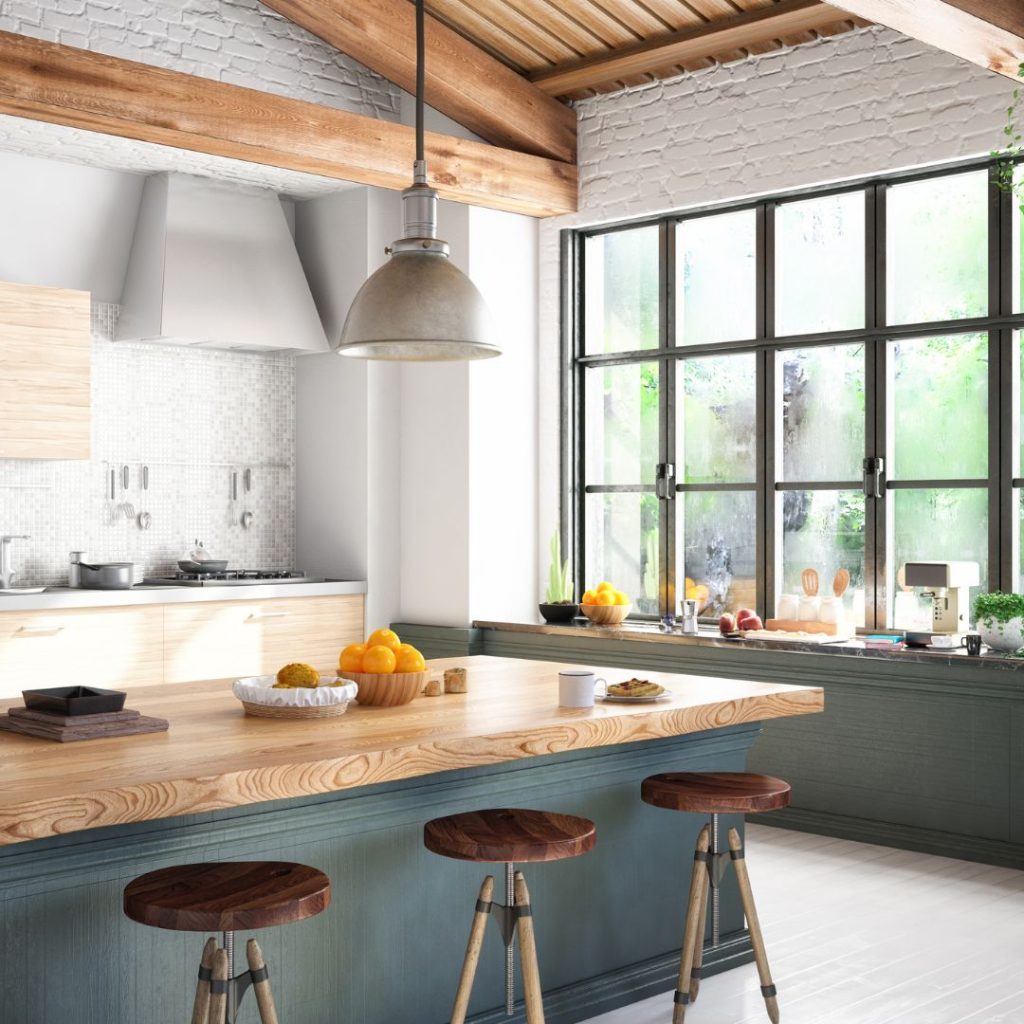
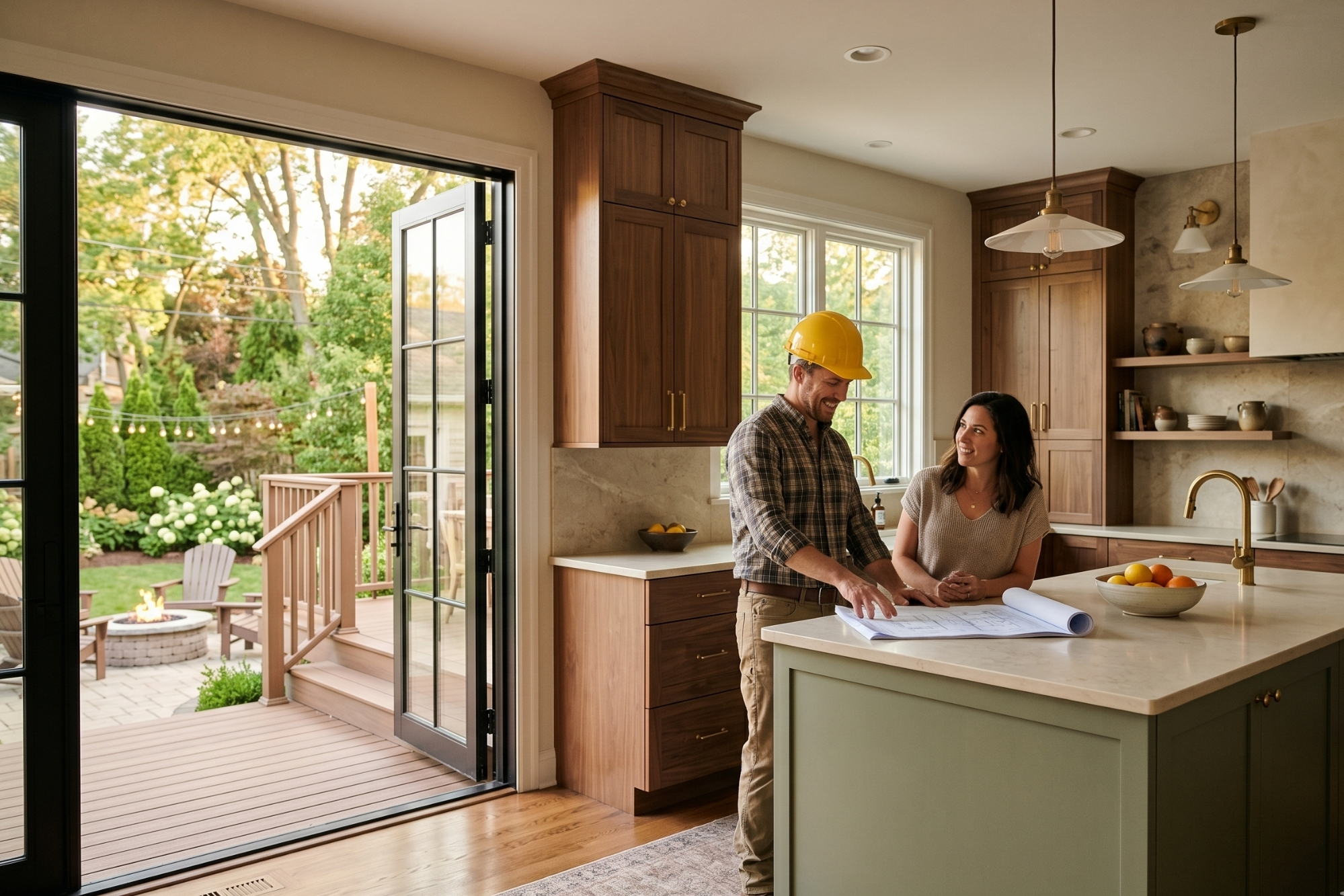
The all-white quartz-and-gray-cabinet kitchen has officially aged out. The 2026 design data from Houzz, NKBA, and most major designer surveys point the same direction: medium tone wood cabinets, warm neutrals, sage and taupe walls, and stone not subway tile as the backsplash material of choice. “Tile drenching” (running the same stone slab from counter to ceiling) is replacing the busy backsplash entirely.
What it means for your project:
- If you were planning a 2018-style white kitchen, you’ll regret it in three years. Lean warm.
- Layout matters more than finishes defined cooking zones beat one giant island.
- Energy-efficient appliances still pay back, but with copper tariff-driven electrical costs up sharply, the savings math has shifted toward induction and heat pumps faster than expected.
👉 If your kitchen still has gray cabinets and a white subway backsplash, you’re not behind you’re right on time to refresh.
🚿 Bathrooms — Designed for the Next 20 Years, Not the Next Listing
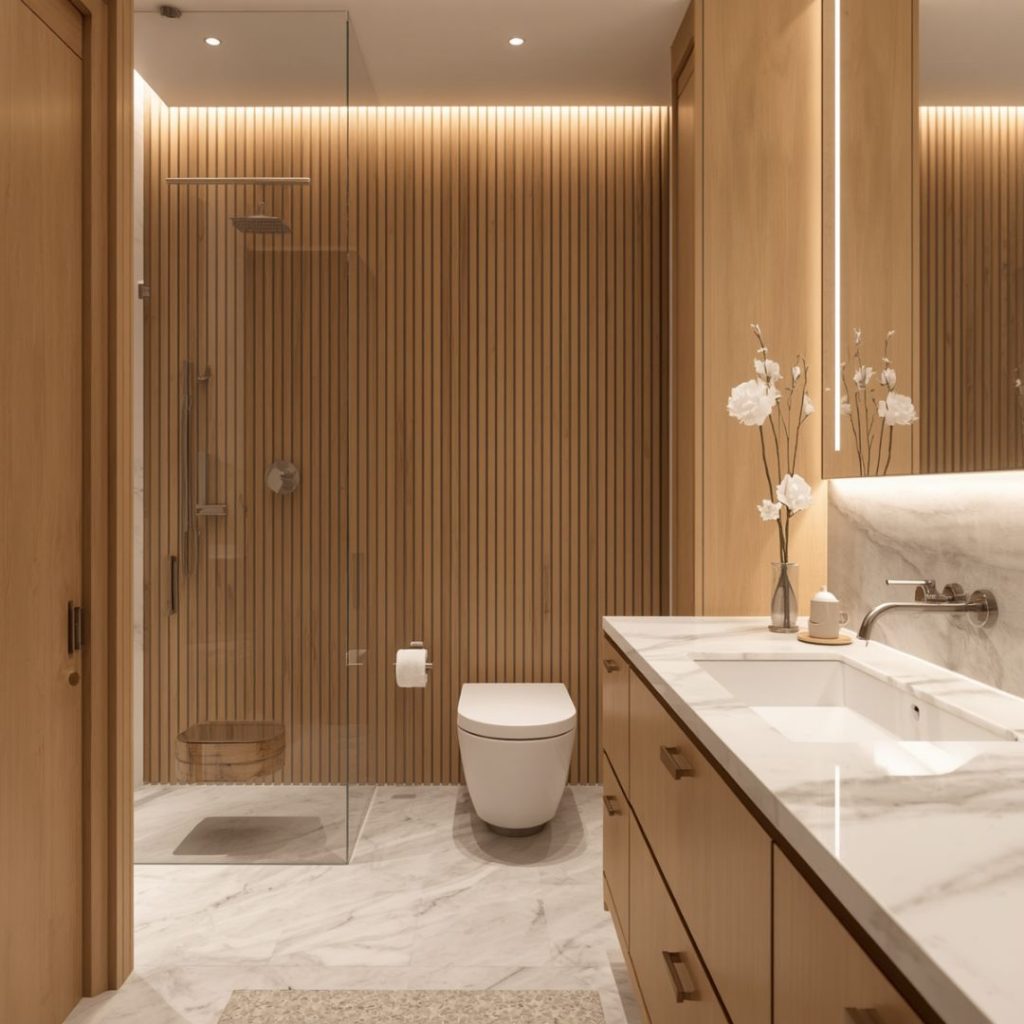
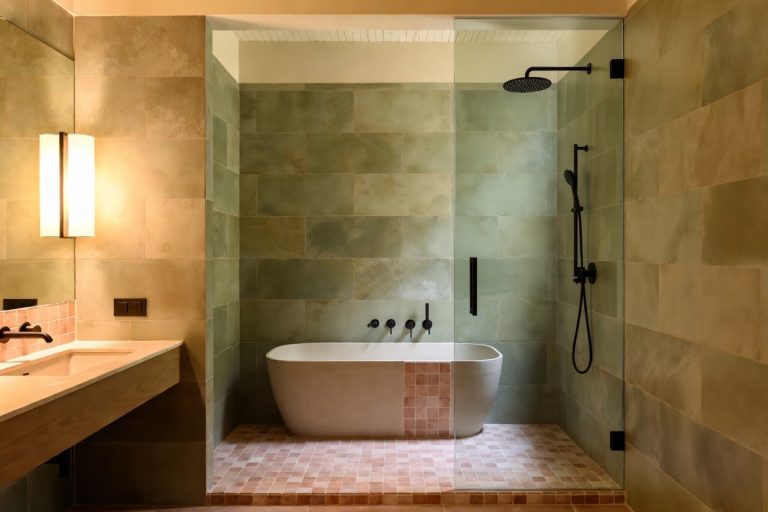
The biggest 2026-bathroom trend isn’t a finish, it’s planning. Less than 4% of U.S. homes are actually designed for the mobility needs most owners will eventually have. Curbless showers, wider doorways, blocking in walls for future grab bars, and proper drainage slope all have to be planned before framing. Retrofitting them later typically costs three to five times more.
This is one of the strongest arguments for remodeling in 2026 rather than waiting: if you’re already opening walls, the cost of futureproofing is marginal. If you wait, it’s a second project.
The wellness layer: Bathrooms are increasingly being treated as small wellness spaces, solid-core doors for sound isolation, dimmable warm lighting, and zones for stretching or recovery. Frameless showers and floating vanities still apply, but the design conversation has moved past the “spa look.”
👉 Even if you don’t need accessibility features today, the framing stage is the only affordable moment to add them.
🪵 Outdoor “Garden Rooms” Not Just a Deck
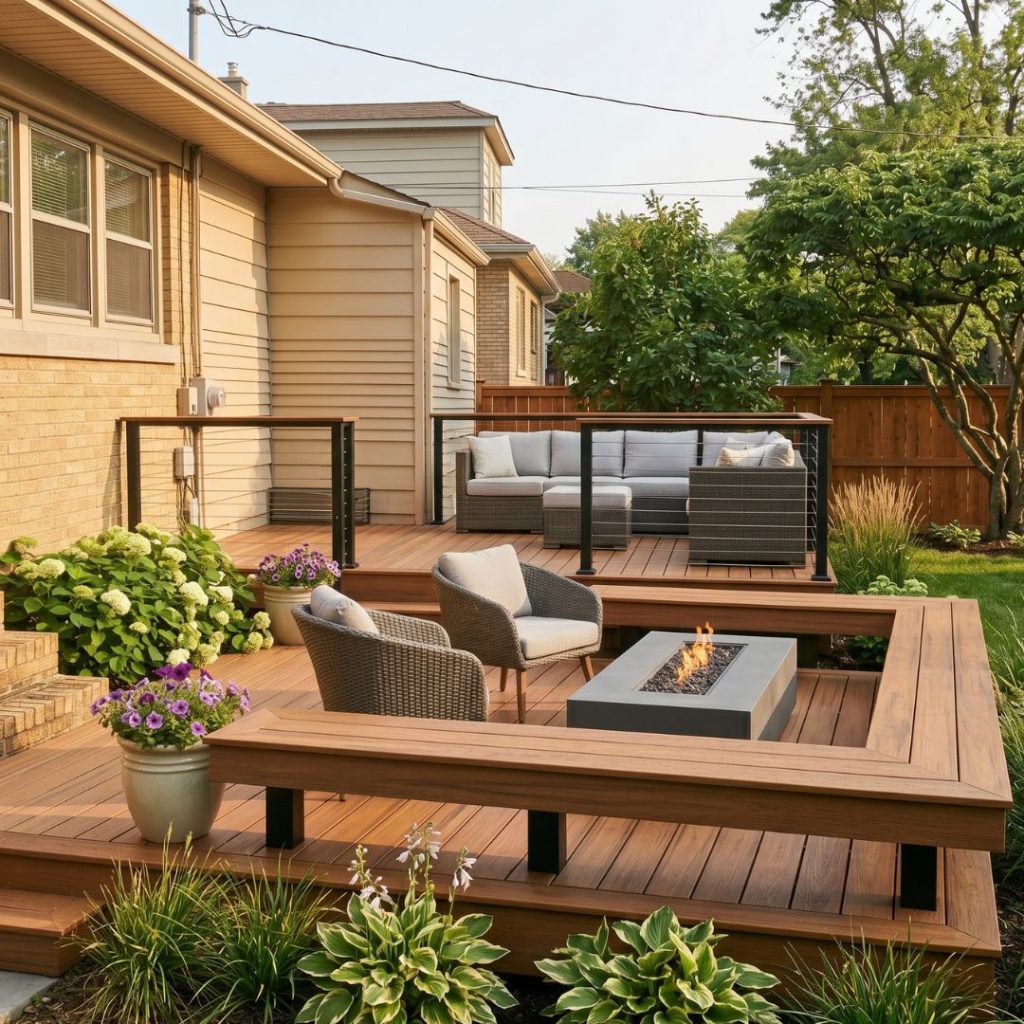
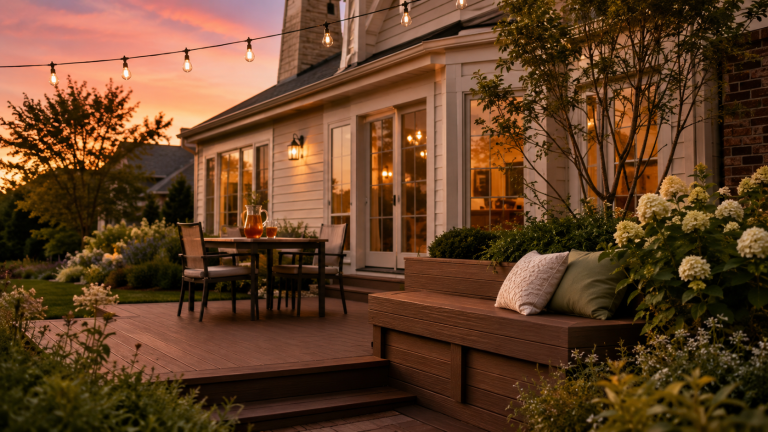
A single rectangular deck attached to the back of the house is being replaced by what designers now call “garden rooms”: a series of defined outdoor zones, a dining patio, a fire-pit lounge, a quiet corner connected by paths rather than one big open platform.
This matches what Yellow Hat is seeing across DuPage, Lake, and Cook counties: clients who would have built a 400 square foot deck five years ago are now asking for 250 square feet of deck plus a paver patio and a screened nook. The total footprint and budget are similar; the daily use is dramatically better.
Reality check on cost: Illinois deck construction now runs roughly $17–$57 per square foot, and Chicago labor rates are pushing the upper end. Composite remains the right call for our freeze-thaw cycles but plan it as part of a layout, not a standalone object.
👉 If you’re imagining a deck, ask your contractor what a layered outdoor plan would look like instead.
🌱 Envelope and Systems: The One That Quietly Outperforms
Here’s the boring upgrade nobody writes about, and everyone should be doing insulation, air sealing, window replacement, and HVAC. With copper now under a 50% tariff and electrical infrastructure costs climbing, the math on doing it later only gets worse.
Smart thermostats and efficient HVAC don’t generate Instagram before and afters, but they’re the single category where the 2026 cost environment most strongly rewards acting now versus waiting. Wisconsin and Illinois utility programs continue to offer rebates that combined with locked in current pricing produce the most effective ROI of any project on this list.
👉 Less glamorous, but the project most likely to pay you back in dollars rather than enjoyment.
Why May Actually Matters in 2026 (Not the Usual Reasons)? The standard “book before summer” line is half true. Here’s the full picture:
Labor, not materials, is the squeeze. The Associated Builders and Contractors estimates the U.S. construction industry needs roughly 499,000 additional workers in 2026 to meet demand, with 94% of contractors reporting difficulty filling positions. In Chicago specifically, construction costs are rising at nearly double-digit rates and its labor doing the pushing, not lumber. Booking now isn’t about beating “summer rush.” It’s about securing skilled crews in a market with a structural shortage.
Tariffs are already in terms of price. Steel, aluminum, and copper currently carry 50% tariffs. Softwood lumber derivatives are at 25%. Cushman & Wakefield estimates total construction project costs are up about 3% from 2024 baselines not “expected to rise,” but already there. Material prices won’t drop in mid-2026; the smart move is to scope and contract early, lock pricing, and avoid further volatility.
The framing window only opens once. As covered in the bathroom and kitchen sections, the decisions that cost almost nothing now wider doorways, future proof plumbing, electrical capacity for induction or EV charging, become major retrofits if you wait. May let you finalize plans before crews are committed for the season.
The Yellow Hat Take
Most remodeling content is still selling 2019 advice in 2026 packaging. The honest version: you’re probably staying in your house longer than you thought, the design world has shifted warmer and more intentionally, and the cost environment rewards planning, not waiting.
We design projects for the life you’ll actually live in this house. Not for the listing photo you may never take.